Wired for Unease: How Gen Z Turned Musical Discomfort Into a Badge of Realness
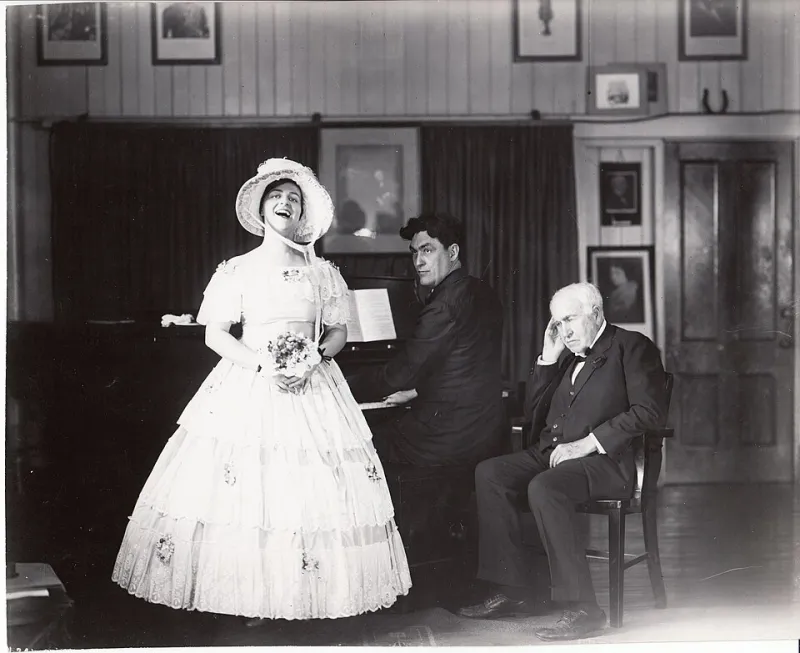
Photo: Unknown authorUnknown author, Public domain, via Wikimedia Commons
There's a moment every new Locrian fan describes almost the same way. The music hits, something in your chest tightens, your brain tells you to skip — and then you don't. You sit with it. And somewhere in that friction, something clicks. What used to feel like a flaw starts feeling like the whole point.
That experience isn't accidental. And for a growing number of Gen Z listeners across the US, it's become the entire reason they show up.
The Comfort of Being Uncomfortable
For decades, the music industry operated on a pretty simple premise: make people feel good, and they'll keep listening. Hooks, resolution, familiar chord progressions — these weren't just production choices, they were psychological contracts between artist and audience. Music was supposed to soothe.
Something has shifted. Music psychologist Dr. Nora Vance, who studies emotional response to atonal and dissonant sounds at a university in Portland, puts it bluntly: "We're seeing younger listeners actively reframe discomfort as a signal of truth. If a piece of music feels easy, some of them are starting to wonder what's being hidden."
That's not just a niche observation. Across Reddit threads, Discord servers, and TikTok comment sections, you'll find Gen Z fans describing their relationship with challenging music in almost therapeutic terms. Dissonance isn't something they endure — it's something they seek out, the way an earlier generation might have sought out confessional singer-songwriters or raw punk recordings.
The difference is that what they're seeking now is structural. It's baked into the actual notes.
Anxiety as Aesthetic
It's hard to talk about Gen Z's musical tastes without talking about the world they grew up in. Mass shootings, a pandemic, climate anxiety, the 2008 recession's long shadow on their parents' finances — this is a generation that has never really known a news cycle that felt safe. Add to that the relentless optimization of social media, where every post is filtered and every interaction is gamified, and you start to understand why music that sounds unresolved might feel more honest than music that ties everything up neatly.
Jordan, 22, a college student in Chicago who discovered Locrian through a friend's playlist, described it this way: "Most music sounds like it's trying to convince you everything's fine. This doesn't do that. It sounds like what being alive actually feels like right now."
That sentiment shows up again and again. The unease isn't a side effect — it's the feature. Digital fatigue, social fragmentation, the pressure to perform wellness online while privately struggling: these experiences have quietly rewired what "good" sounds like for a significant slice of the listening public.
Vance's research backs this up. In studies where younger participants were played both consonant and dissonant music, those who scored higher on measures of digital media consumption were more likely to rate dissonant pieces as "authentic" and "relatable" — even when they also rated them as uncomfortable. Comfort and authenticity, it turns out, are no longer the same thing.
The Artists Who Saw It Coming
Emerging artists in the experimental and avant-garde space have been watching this shift happen in real time, and some of them have started leaning into it deliberately.
Marcus Delray, a 25-year-old producer from Atlanta who records under the name Hollow Interval, started posting tracks online three years ago that he half-expected to go nowhere. "I thought maybe fifty people would get it," he says. "I wasn't trying to make something pleasant. I was trying to make something true." His most recent release — a 40-minute collection of layered, unresolved tones and distorted vocals — found an audience of tens of thousands without a single radio play or playlist placement.
Delray credits the shift to something he calls "the exhaustion of polish." "Everything sounds produced to within an inch of its life right now. When people hear something that doesn't resolve, something that stays tense, I think it registers as real in a way that the polished stuff just doesn't anymore."
Other artists echo this. Sasha Orin, a 23-year-old violinist from Brooklyn who composes in the Locrian mode and adjacent tonal spaces, describes her audience as overwhelmingly young and overwhelmingly hungry for something that doesn't pretend. "I had a fan tell me my music was the first thing that made her feel less alone in years. Not because it was happy — because it wasn't trying to be."
The Psychology of the Unresolved
There's actual science behind why sitting with dissonance can feel cathartic rather than merely unpleasant. Music psychologists have long studied the concept of "musical tension and release" — the idea that our brains are wired to anticipate resolution and feel rewarded when it arrives. Dissonant music, by withholding or delaying that release, creates a sustained tension that can mirror emotional states we're already carrying.
For listeners already living with background anxiety, that mirroring effect can feel validating rather than distressing. It's the musical equivalent of someone saying I see you rather than cheer up.
"There's a meaningful difference between music that processes difficult emotions and music that bypasses them," Vance explains. "A lot of mainstream music bypasses. It puts a sonic smile over something that isn't smiling. Dissonant music tends to sit in the feeling rather than escape it, and that can be genuinely therapeutic for some listeners."
Currency, Not Just Taste
What makes this more than just a subculture trend is the way Gen Z has turned musical discomfort into a form of social currency. Knowing your Locrian from your Lydian, being able to reference Xenakis or early Swans in a conversation, building playlists that challenge rather than comfort — these have become markers of taste, identity, and even credibility in certain online communities.
In a media landscape where algorithmic recommendation systems are constantly trying to predict and serve your preferences, choosing music that actively resists easy enjoyment is almost a political act. It's a refusal of the curated, optimized experience. It's saying: I want something real, even if real is hard.
For a band like Locrian, whose entire artistic identity is built on the idea that dissonance can be art rather than error, the cultural moment feels less like luck and more like the world finally catching up. The listeners are here. They're young. They're not looking for comfort.
They're looking for honesty. And right now, that sounds like dissonance.