Built in the Chat: How Gen Z Is Growing Hardcore Fan Bases for Experimental Music Before Playing a Single Show
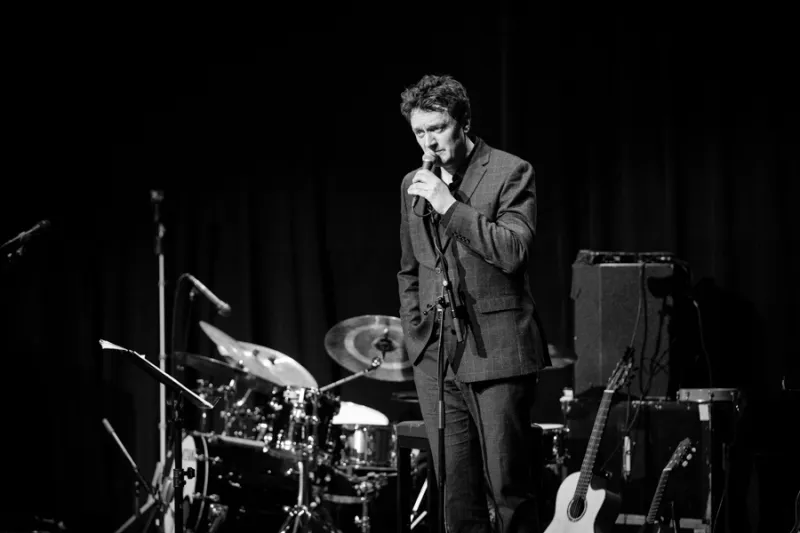
Photo: Tore Sætre, CC BY-SA 4.0, via Wikimedia Commons
There's an artist somewhere right now — probably 19, probably recording in a bedroom that doubles as a closet — who has a few thousand dedicated listeners who've never seen them perform live, may not know their real name, and found them through a six-second clip of something that sounded like a dial-up modem being fed through a guitar amp. And those listeners are devoted.
This is the new underground, and it doesn't look much like the old one.
The Discord Basement Scene
If you want to understand where experimental and dissonant music is being discovered and developed right now, you have to spend time in Discord servers. Not the massive ones — the small, curated communities of a few hundred people who share a specific and often very weird sonic obsession.
These servers function like the record store back rooms and zine distros of previous generations, except they're open 24/7, they're free to join, and a teenager in rural Ohio has the same access as someone in Brooklyn. Artists drop work-in-progress recordings directly into channels. Listeners respond in real time. Feedback loops that once took months through physical distribution now happen overnight.
For Gen Z artists making music that doesn't fit conventional categories — stuff that's harsh, dissonant, rhythmically strange, or sonically hostile in ways that feel intentional rather than accidental — these servers have become the primary site of audience development. Not a supplement to traditional promotion. The actual foundation.
"I had a community before I had finished songs," said one 22-year-old producer who makes what they describe as "industrial ambient with bad intentions" and asked to go by their online handle. "People were invested in the process. By the time I dropped anything properly, there were already people who felt ownership over it."
TikTok's Accidental Role in Normalizing Jarring Sound
TikTok was not designed with dissonant music in mind. Its recommendation algorithm rewards engagement, and for a long time the assumption was that engagement meant accessibility — catchy hooks, familiar structures, sounds that don't make people instinctively reach for the volume button.
What actually happened was messier and more interesting. The platform's short-form format turned out to be surprisingly hospitable to challenging sounds, for a specific reason: jarring audio gets reactions, and reactions are engagement. A clip that makes someone stop scrolling because something sounds genuinely wrong — in the best possible way — performs well by the metrics that matter to the algorithm.
Several viral moments over the past few years introduced genuinely abrasive sounds to audiences who had no prior context for them. Videos set to harsh noise tracks, clips of artists playing instruments in ways that look and sound almost confrontational, even snippets of music theory content explaining why certain intervals feel so deeply unsettling — all of it has found audiences that nobody predicted.
The comment sections on these videos are a phenomenon in themselves. Half confusion, half genuine curiosity, with a significant percentage of people saying some variation of "I don't know why but I need more of this." That response — the magnetic pull of something that simultaneously repels and attracts — is the emotional core of what dissonant music has always offered. TikTok just delivered it to people who didn't know they were looking for it.
Authenticity as the New Gatekeeping
Here's where it gets complicated. Gen Z's relationship to authenticity in music is genuinely different from previous generations, and it has specific implications for experimental artists trying to build audiences online.
For younger listeners who've grown up watching the machinery of music promotion get exposed in real time — the bought followers, the manufactured beef, the algorithmic gaming — the bar for what feels real is high and somewhat unpredictable. Paradoxically, music that sounds unpolished, difficult, or resistant to commercial appeal can read as more authentic precisely because it seems like it couldn't have been designed to please anyone.
This creates a strange dynamic where the underground credibility that experimental artists used to earn through years of touring and physical releases can now be established — or destroyed — almost instantly online. An artist who seems too calculated about their weirdness gets called out fast. But one who seems genuinely committed to a challenging vision, who engages with their community without performing accessibility they don't actually have, can build a devoted following that feels almost tribal in its intensity.
"The fans can tell when you're doing the bit versus when it's actually you," said one 24-year-old artist who's built a following of several thousand for music that blends drone, field recordings, and processed vocals into something genuinely difficult to categorize. "And for this kind of music especially, if they think you're doing the bit, they're gone."
What 'Underground' Even Means Anymore
The old definition of underground music was largely geographic and logistical. You were underground if you couldn't get distribution, couldn't get booked, couldn't get press. The barriers were physical and institutional. Breaking through meant convincing gatekeepers to open the door.
That framework doesn't map cleanly onto what's happening now. An artist can have a genuinely devoted audience of ten thousand people, a robust online community, and a consistent output of challenging work — all without having played a single show or gotten a single piece of traditional press coverage. Are they underground? The music is certainly not mainstream. But the community around it is real and engaged in ways that plenty of signed artists would envy.
The more useful frame might be intentional obscurity — the choice to remain in spaces where the audience is self-selected and genuinely invested, rather than chasing the kind of broad exposure that tends to flatten what makes challenging music interesting in the first place.
Some artists are making that choice consciously. Others are simply building what they can with the tools available and not overthinking the category. Either way, the result is a landscape where the path from bedroom recording to devoted fan base no longer requires anyone's permission.
The Live Question
The one thing that online community-building genuinely can't replicate is the physical experience of dissonant music in a room. For experimental and harsh music especially, the live show is often where the work fully lands — the volume, the physical sensation, the shared experience of being in a space with sound that's doing something unusual to everyone present.
Most of the artists building audiences this way know this. The online community is the foundation, not the ceiling. When they do eventually play live — sometimes for the first time to rooms full of people who've been listening for years — the intensity of that connection can be remarkable. The audience already knows the work. They've talked about it, argued about it, shared it. The show becomes a reunion as much as a debut.
That's a different kind of underground than the one that came before it. Smaller in some ways, more intentional, and in its own way, more durable.