No Radio, No Problem: How the Internet Gave Dissonant Music Its Moment
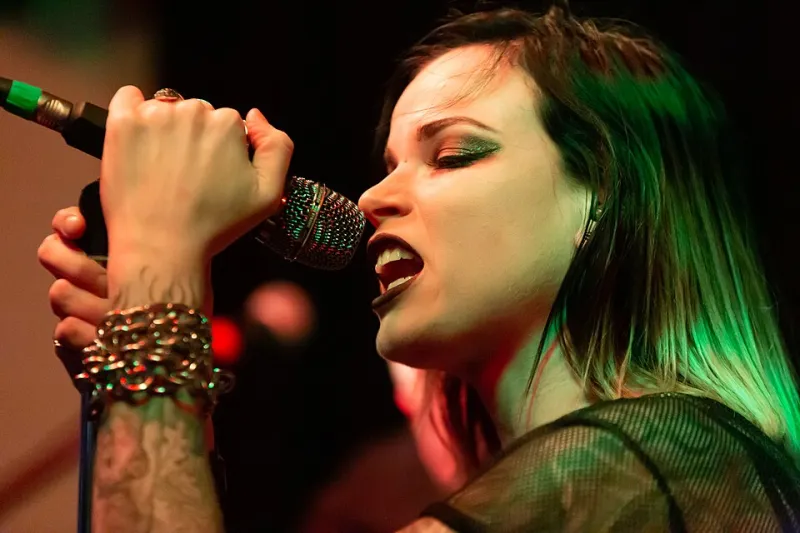
Photo: Steffen Prößdorf, CC BY-SA 4.0, via Wikimedia Commons
For most of the 20th century, if you wanted to find music that challenged conventional harmony — the kind of stuff built on dissonance, atonality, and unconventional structure — you had to know someone. You needed the friend with the record collection, the college radio DJ who stayed on past midnight, the zine that reviewed bands with names you couldn't pronounce. Experimental and avant-garde music survived through networks of devoted weirdos passing knowledge person to person, like some underground railroad for difficult sounds.
That world didn't disappear, exactly. But something significant happened when streaming platforms scaled up and algorithmic recommendation became a fact of daily life. The gatekeepers didn't just step aside — they got replaced by systems that, somewhat accidentally, turned out to be pretty good at connecting curious listeners with music that should, by all conventional logic, have no audience at all.
The Old World Was Brutal
Let's be honest about what the pre-streaming landscape looked like for experimental artists. Radio programmers had zero incentive to touch anything that might make a casual listener reach for the dial. Major labels weren't signing acts whose primary appeal was tonal instability and structural unpredictability. Physical distribution meant you needed a relationship with a distributor who was already stretched thin dealing with music people actually bought in numbers.
So bands making genuinely challenging music — think early noise rock, black metal, avant-garde jazz-metal hybrids, drone doom — existed in a kind of parallel economy. Small labels, limited pressings, shows at venues that were basically just rooms with a PA system. The audience was real and passionate, but it was also small and geographically scattered in ways that made it nearly impossible to sustain a career.
This wasn't just an inconvenience. It actively shaped what music got made. Artists who might have pushed further into dissonance pulled back because they needed to maintain some connection to a listenable audience. The economics of scarcity enforced a kind of tonal moderation.
Bandcamp Changed the Math
When Bandcamp launched in 2008, the immediate effect was practical: artists could sell music directly to fans without a label or distributor taking a cut. But the deeper effect was cultural. For the first time, an artist making genuinely uncommercial music could reach a global audience without any infrastructure beyond an internet connection.
The platform's discovery features weren't sophisticated by today's standards, but they didn't need to be. Fans browsing tags like "harsh noise," "microtonal," or "black metal" were self-selecting. They wanted to be there. And when they found something they loved, they told people — in forums, in comment sections, in Discord servers that didn't exist yet but would soon.
Bandcamp became the connective tissue for a generation of experimental artists who built genuine cult followings without a single radio spin. Labels like Profound Lore, Sargent House, and Relapse found that their Bandcamp pages were doing real commercial work. The audience for difficult music turned out to be larger than the old gatekeepers had assumed — it had just never had a convenient place to congregate.
Spotify's Accidental Evangelism
Spotify's role in this story is more complicated, and honestly more interesting. The platform's economics are notoriously rough on artists — the per-stream payouts are a whole separate conversation. But from a discovery standpoint, the algorithmic recommendation system has done something remarkable for niche and challenging music.
Here's the mechanism: Spotify's algorithms don't care about genre categories or conventional notions of commercial viability. They care about listening behavior. If a significant cluster of users who listen to Tool also spend time with a particular avant-garde metal act, the algorithm starts connecting those dots. Suddenly a band with 10,000 monthly listeners is showing up in the Discover Weekly playlists of Tool fans across the country.
This is genuinely new. There was no equivalent pathway before. The old world required human gatekeepers to make those connections, and human gatekeepers had biases, commercial pressures, and limited bandwidth. The algorithm has none of those constraints. It just follows the behavioral data wherever it leads.
The result has been a measurable expansion in listener tolerance for unconventional sounds. People are encountering dissonance, polyrhythm, and atonality through recommendation systems rather than seeking them out deliberately — and many of them are sticking around. The music does the convincing once you get someone to actually listen.
YouTube as Music School
You can't tell this story without talking about YouTube, which has functioned as something like a free music school for millions of American listeners. The platform's combination of music videos, live performance footage, and — crucially — theory explainer content has created an environment where a curious listener can go from "what is this weird chord?" to a reasonably solid understanding of modal harmony in an afternoon.
Channels breaking down the music theory behind challenging artists have millions of subscribers. Videos explaining why a particular Meshuggah riff feels so disorienting, or what makes a specific Radiohead chord progression so emotionally complex, regularly hit hundreds of thousands of views. This isn't just entertainment — it's building the listening literacy that makes experimental music more accessible.
When listeners understand why something sounds the way it does, their relationship to it changes. The dissonance stops feeling like a mistake or a challenge and starts feeling like a language they're learning. And once you start learning that language, it's hard to go back.
What This Means Going Forward
The streaming era hasn't solved all the problems facing experimental and dissonant music. The economics are still difficult. Algorithmic systems have their own biases and can trap artists in recommendation bubbles that limit growth. And there's a real question about whether the casual exposure that streaming enables translates into the kind of deep, committed fandom that sustains a career long-term.
But the fundamental shift is real and it matters. Music that would have lived and died in a 500-person subculture twenty years ago now has genuine pathways to audiences in the thousands or tens of thousands. Artists making genuinely challenging work can find their people without compromising the work to do it.
For anyone making music at the intersection of dissonance and intention — the kind of music this site was built around — that's not a small thing. It's the difference between a cult and a community. And communities, it turns out, are a lot harder to ignore.