When Ugly Sounds Tell the Truth: How Dissonant Music Became America's Emotional Reality Check
There's a specific kind of silence that follows a piece of music that never quite resolves. Not the satisfied quiet after a song ends on the tonic, everything tied up neatly — but the suspended, slightly breathless pause when something deliberately refuses to land. Listeners who find their way to dissonant music know that feeling well. And increasingly, they're chasing it.
Something is shifting in how Americans relate to music during hard times. The instinct used to be to reach for comfort — familiar chord progressions, reassuring melodies, lyrics that told you everything was going to be okay. But a growing number of listeners are doing something different. They're turning toward music that sounds like the world actually feels: fractured, unresolved, and uncomfortably honest.
The Comfort Trap
For decades, the mainstream music industry operated on a fairly simple emotional contract. You're sad, here's a sad song with a hopeful bridge. You're anxious, here's something with a steady beat to calm you down. The formula worked because it offered resolution — a musical promise that the feeling would pass.
But that contract has started to feel hollow for a lot of people. When you're living through genuine uncertainty — economic instability, social fragmentation, a news cycle that never seems to decelerate — a song that wraps everything in a major-key bow can feel almost insulting. Like being handed a greeting card when what you actually needed was a real conversation.
"There's a kind of emotional gaslighting that can happen with overly polished music," says one music therapist based in Chicago who works primarily with young adults navigating anxiety disorders. "When someone is genuinely distressed and they hear something that sounds artificially resolved, it can actually increase their sense of isolation. It's like the music is telling them their feelings are wrong."
Dissonant music doesn't do that. It sits in the tension. It refuses the easy exit.
Authenticity as a Sound
The word "authentic" gets thrown around so much it's nearly meaningless — but there's something real underneath it that listeners are responding to. When a piece of music sounds genuinely difficult, when it doesn't sand down its own rough edges, it communicates something that overproduced tracks simply can't: that the person who made it wasn't trying to make you feel better. They were trying to tell you something true.
That distinction matters enormously right now. Americans are navigating what researchers have started calling an "authenticity crisis" — a widespread skepticism toward curated, optimized versions of reality. Social media feeds, political messaging, even wellness culture have all become so aggressively polished that people have developed a kind of allergy to anything that feels manufactured.
Music that sounds uncomfortable doesn't trigger that allergy. It bypasses the filters.
"I started listening to more experimental and dissonant stuff during the pandemic," says Marcus, a 29-year-old graphic designer in Brooklyn. "I couldn't stand anything that felt like it was trying to sell me a feeling. The music I ended up connecting with most was stuff that just... sat with me in the bad place. It didn't try to fix anything."
That sentiment shows up repeatedly when you talk to listeners who've found their way into more challenging sonic territory. The music isn't comforting in the traditional sense. But it is validating — and for a lot of people, that's more valuable.
The Psychology of Sitting With It
Music psychologists have a concept called "aesthetic distance" — the idea that we can engage with difficult emotions through art more safely than we can engage with them directly. Horror movies work this way. Tragedy in literature works this way. And dissonant music, it turns out, works this way too.
When a piece of music holds tension without resolving it, it creates a space where the listener can feel their own unresolved tensions without being overwhelmed by them. The music is carrying some of the weight. It's externalizing the internal.
"There's actually solid research suggesting that listening to music that matches a negative emotional state can be more effective at processing that state than listening to something that contradicts it," notes a music cognition researcher at a Midwestern university who asked not to be named because the work is ongoing. "The mismatch — trying to feel better by listening to something happy when you're not — can create a kind of emotional friction that makes things worse."
Dissonant music, by its nature, tends to match the emotional texture of difficult experiences. It doesn't fight against the feeling. It acknowledges it.
When the Avant-Garde Goes Mainstream-Adjacent
None of this means dissonant music is suddenly topping the Billboard charts. But its cultural reach has expanded in ways that would have seemed unlikely even ten years ago. It's showing up as background texture in prestige television. It's filtering into film scores that used to default to sweeping orchestral resolution. It's building genuine communities online — not just among music nerds, but among regular people who stumbled across something that felt real and didn't let go.
The gatekeeping that used to keep challenging music confined to academic circles and experimental venues has largely dissolved. Streaming platforms, algorithmic discovery, and the sheer volume of music available online have made it possible for a 22-year-old in rural Ohio to fall down a rabbit hole that ends at some genuinely thorny sonic territory — and to find other people who made the same trip.
"The audience for this kind of music has always existed," says one independent music critic who covers experimental and avant-garde genres. "What's changed is the infrastructure. People can find it now. And they can find each other."
The Locrian Moment
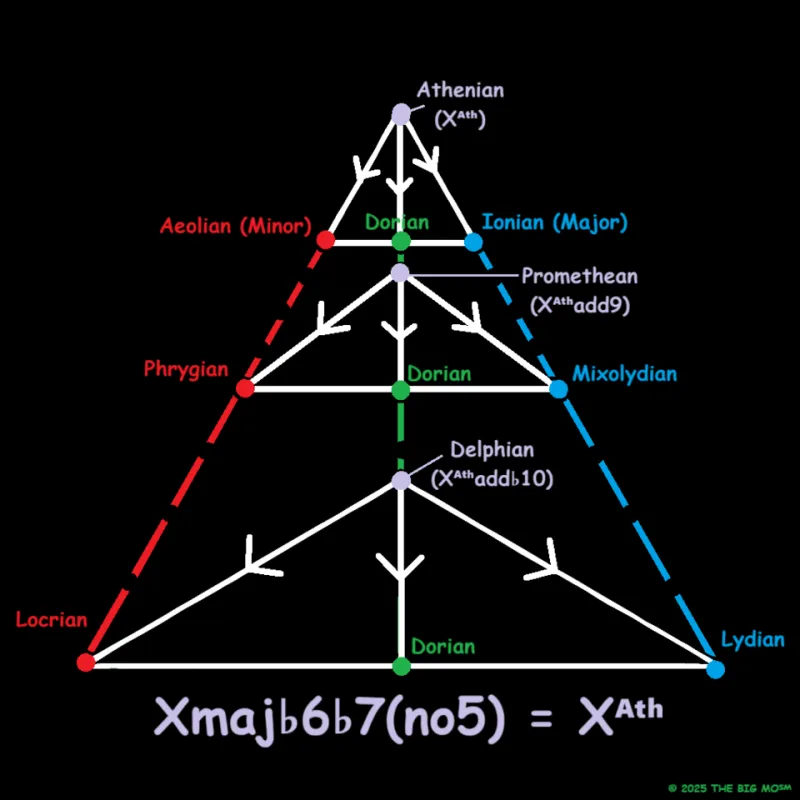
There's something almost poetic about the fact that the Locrian mode — the scale that classical composers treated like a structural impossibility, built on an unstable foundation that refuses to resolve cleanly — is now a touchstone for a generation of musicians making some of the most emotionally resonant work around. The mode that wasn't supposed to work has become a framework for music that works precisely because it doesn't pretend to.
That's the paradox at the heart of what's happening right now. The music that sounds broken is the music that feels honest. The sounds that trained ears used to reject as failures of craft have become, for a growing audience, the most accurate emotional documents of their time.
America is living through something genuinely difficult. The old musical contracts — the ones built on resolution and reassurance — don't quite cover it. And in that gap, something interesting is growing: a listening culture that's learned to find meaning not in the answer, but in the tension. Not in the resolution, but in the refusal to pretend one is coming.
Sometimes the most truthful thing a piece of music can do is stay unresolved. Right now, for a lot of people, that's exactly what they needed to hear.