Miles for the Music: Inside the Underground Road Trips Fueling Experimental Music's Most Devoted Fan Culture
Jordan Foss didn't plan on spending a long weekend driving from Columbus to a warehouse somewhere outside of Louisville. But when a Discord message dropped a pin with nothing but a date and a vague neighborhood reference, she was already texting her roommate about splitting gas money. "There was no ticket link," she says. "There was no opener listed. We didn't even know if there'd be a PA system. We just went."
That kind of blind, gasoline-fueled devotion is becoming something of a signature move for a particular breed of experimental music fan. Across the country, people are quietly building lives around the hunt — not just for the music itself, but for the experience of chasing it down through half-clues, word of mouth, and the weird social graphs that form when a few hundred people love something deeply uncommercial.
The Show That Doesn't Want to Be Found
Traditional touring is built on predictability. Venue contracts, ticketing platforms, Spotify presave links, a Bandsintown notification three weeks out. The experimental underground operates on something closer to folklore. Shows get announced through private mailing lists, buried in Reddit threads, or whispered about in the comment sections of year-old YouTube uploads. Sometimes the venue itself is a secret until forty-eight hours before doors.
For artists working in dissonant and experimental spaces — the kind of music that lives in the uncomfortable frequencies most radio programmers actively avoid — this opacity isn't accidental. It filters the crowd. It keeps the energy intimate. And it creates a selection process that draws in exactly the kind of listener who will stand still for forty-five minutes while someone plays prepared guitar through a broken amplifier and call it the best night of their year.
"You can't half-commit to finding one of these shows," says Marcus Teel, a 29-year-old from Portland who estimates he's driven over 11,000 miles in the last two years specifically for underground performances. "By the time you've done the work to get there, you're already locked in. You're not on your phone. You're not bored. You earned your spot in that room."
The Road as Part of the Ritual
Ask anyone who's done this more than once and they'll tell you the drive is inseparable from the show. There's something about six hours of highway, gas station coffee, and a playlist built specifically for the occasion that primes you for whatever's waiting at the other end.
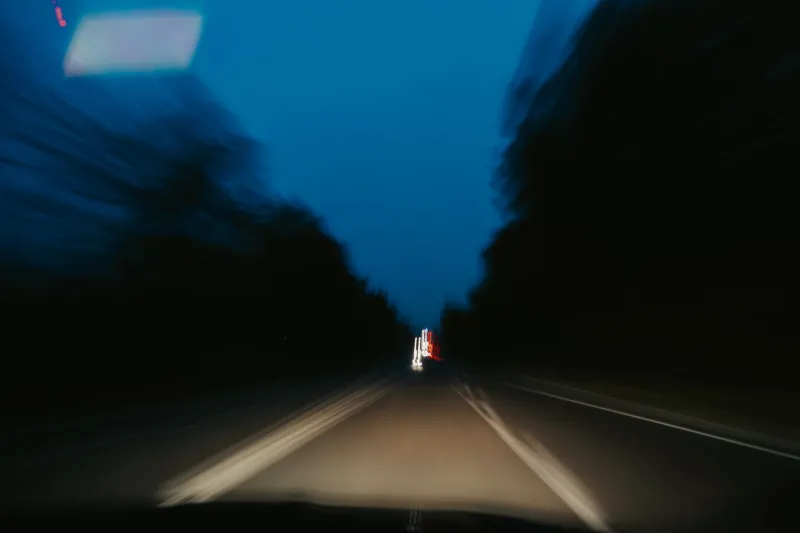
Foss describes a particular stretch of I-71 in the dark as "genuinely cinematic" in a way she can't fully explain. "You're in this weird headspace where you're not home anymore, but you're not there yet. And you've got this music on that you're about to see performed live, and it just hits different when you're moving through the dark at 75 miles an hour."
For a lot of fans, those drives have become the setting for some of their closest friendships. Carpools turn into conversation marathons. The shared weirdness of the mission — explaining to a gas station attendant in rural Indiana that yes, you're driving to Cincinnati to see a band that has 4,000 monthly Spotify listeners — creates a bonding shorthand that's hard to replicate anywhere else.
Finding the Room
Not every pilgrimage has a happy ending. Shows get canceled. Venues fall through. Someone misreads an address and ends up at the wrong industrial park entirely. A significant chunk of the lore around these road trips involves near-misses — arriving to find a locked door, or a different show entirely, or nothing at all.
But even those stories get told with a kind of affection. Teel spent one night sleeping in his car in Albuquerque after a show fell apart due to a noise complaint before the first performer even finished setting up. "I was annoyed for about twenty minutes," he says. "Then I went and got breakfast tacos at two in the morning and talked to some people I'd met in line. We're still in a group chat. I'd do it again tomorrow."
There's a loose but real infrastructure developing around all of this. Certain regional Facebook groups function as clearinghouses for show announcements. Some artists have built dedicated mailing lists specifically for fans willing to travel — sometimes with a simple question on the signup form: "How far would you go?" The answers, apparently, range from "two hours" to "wherever."
Why This, Why Now
It's worth asking why this kind of devotion is intensifying right now, at a moment when you can theoretically access almost any music from your couch with zero friction. Part of the answer is probably that frictionlessness itself. When everything is available instantly, the things that require effort acquire a different kind of weight.
Experimental and dissonant music has always had a confrontational relationship with convenience. It doesn't go down easy. It doesn't soundtrack a montage. It asks something of you. And for a growing number of people, that ask — combined with the physical, logistical challenge of actually getting to the show — produces an experience that streaming simply cannot replicate.
"I've got recordings of some of the best performances I've ever seen," says Foss. "I never listen to them. They're not the point. The point was being in that room, at that moment, having driven to get there. The recording is just evidence that it happened."
Community Built on the Road
What's emerging out of all this movement is something that functions less like a fan base and more like a distributed community with geography as its connective tissue. People who met at a show in Tucson end up crashing with each other in Minneapolis six months later. The network is loose but surprisingly durable.
For a genre that can sometimes feel isolating — this isn't music you put on at a party and expect universal enthusiasm — that sense of belonging carries real weight. The road trips are, in a meaningful way, the community. The music is the reason, but the miles are the method.
And at the center of all of it is a simple, stubborn conviction: that some things are worth driving for. That the best experiences don't come with a convenience fee and a guaranteed parking structure. That showing up — actually, physically showing up — is its own form of meaning.
Jordan Foss is already planning her next trip. She doesn't know where yet. She's waiting on a message.