Holy Ground: The Hidden Spaces Where America's Experimental Musicians Are Rewiring Sound
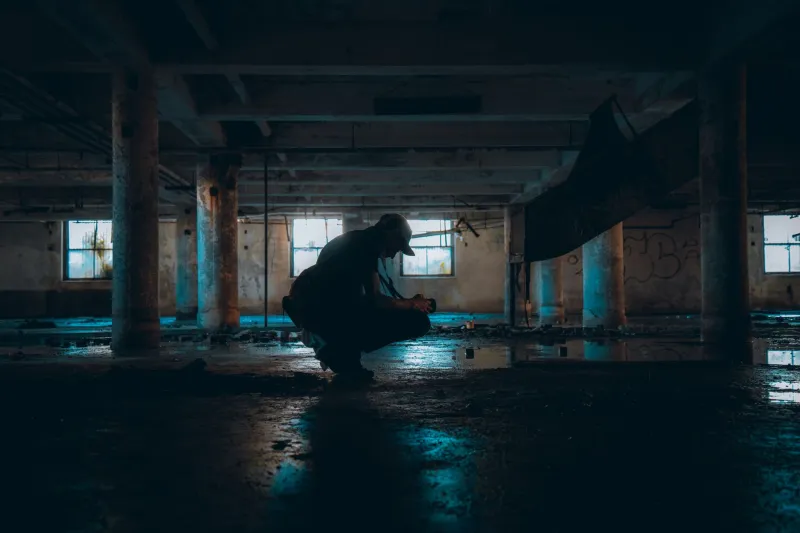
There's a warehouse on the outskirts of Detroit that doesn't have a listed phone number. You find it through a friend of a friend, or you don't find it at all. The loading dock door is perpetually half-open, and inside, somewhere past the stacked pallets and the smell of rust and machine oil, someone is probably running a patch cable between two pieces of gear that were never designed to talk to each other. That sound you hear — that grinding, hovering, deeply uncomfortable chord — is the future being assembled.
America has always had its sacred spaces. Churches, national parks, sports stadiums. But for the growing community of experimental and dissonant musicians working in 2024, the holy sites look a little different. They're decommissioned industrial buildings, repurposed church basements, off-grid cabins in the Appalachian foothills, and flooded recording rooms in New Orleans that engineers decided to stop draining and just start using. These are the places where the sonic pilgrims go. And increasingly, they're where the most important music in the country is being made.
Why Place Still Matters in a Digital World
You'd think location would be irrelevant by now. You can record an album on a laptop in a closet. You can collaborate with someone in Tokyo from your bedroom in Tulsa. And plenty of people do. But talk to the artists who are actively pushing at the edges of what music can be, and almost all of them will eventually start talking about rooms. About acoustics, about isolation, about the specific way a concrete floor in an abandoned textile mill in North Carolina bounces low frequencies back into your chest.
"The space is never neutral," says one producer who splits her time between Chicago and a rented farmhouse in rural Wisconsin. "You think you're making the music, but the room is always making decisions too. When I started recording in spaces that felt genuinely strange to me, the music got stranger in the best way. Like the building had opinions."
That philosophy — that the physical environment is a creative collaborator, not just a backdrop — runs through the entire experimental music underground right now. And it's sending musicians on pilgrimages that look less like tour schedules and more like the kind of quests you'd find in a mythology textbook.
The Rust Belt Circuit
If there's a geographic center of gravity for American experimental music in 2024, it might be the industrial Midwest. Detroit, Cleveland, Pittsburgh, and Chicago form a loose constellation of spaces where post-industrial architecture and relatively affordable real estate have created ideal conditions for weird, boundary-pushing work.
Detroit in particular has developed a reputation as something close to a mecca. The city's long economic contraction left behind enormous, strange buildings with extraordinary acoustical properties — high ceilings, hard surfaces, unusual geometries. Artists who moved in to take advantage of cheap rent discovered something else: the buildings themselves sounded like nothing else on earth. The ambient noise of a city still grinding through decades of transition became raw material.
Similar stories play out in Cleveland's Tremont neighborhood, where a cluster of converted warehouses has quietly become a hub for noise and drone artists, and in Pittsburgh, where a former steel fabrication plant now hosts residencies for composers working in extended technique and microtonal composition.
The Southern Gothic Studio
Head south and the geography shifts, and so does the sound. New Orleans has always occupied a singular place in American music, but the city's experimental underground is doing something genuinely unusual with that legacy. A handful of studios and collective spaces in the Bywater and Tremé neighborhoods are actively incorporating the city's environmental weirdness — the humidity, the heat, the ever-present threat of flooding — into their recording practice.
One engineer who operates out of a semi-subterranean studio near the Industrial Canal has spent years documenting how the city's moisture affects tape machines, analog gear, and the physical behavior of sound in enclosed spaces. His sessions often start with what he calls "the room's mood" — a kind of sonic inventory of whatever the building is doing that day. The results are records that feel genuinely humid, genuinely Southern, genuinely strange in a way that no amount of digital processing could replicate.
Further inland, the Appalachian region is developing its own experimental music geography. Artists seeking isolation — real isolation, not the performative kind — are finding it in the mountains of western North Carolina, eastern Tennessee, and West Virginia. The combination of natural acoustic environments, limited infrastructure, and cultural distance from music industry centers creates a particular kind of creative pressure that some musicians describe as transformative.
The West Coast Outposts
California has its own sacred sites, though they tend toward the conceptual rather than the industrial. The Bay Area has long supported an avant-garde music community, and in 2024, that community is increasingly operating out of unconventional spaces — converted Victorian houses in Oakland, repurposed retail storefronts in San Francisco's Tenderloin, and a remarkable cluster of artist-run studios in Richmond that have become something of a West Coast answer to Detroit's warehouse scene.
Los Angeles, meanwhile, is doing something different. The city's sprawl and car culture have always shaped its music — think of how much LA sound is designed to be heard through car speakers, in motion, in transition. The experimental artists working in LA are playing with that in interesting ways, creating work specifically designed for mobile listening, for headphones on the freeway, for the particular isolation of being surrounded by millions of people while moving at sixty miles an hour through a concrete river.
What the Pilgrimage Actually Means
Ask the musicians making these journeys what they're looking for and the answers are surprisingly consistent. They're looking for friction. For the kind of creative resistance that comes from working in spaces that weren't designed for music, with gear that wasn't designed for each other, in communities that didn't develop according to any industry logic.
There's something almost spiritual about it, and the word "pilgrimage" keeps coming up unprompted. Not in a religious sense, exactly, but in the sense of intentional travel toward something that matters — a place where the work feels more real, more alive, more connected to something larger than the individual artist.
For a music built on dissonance, on the productive tension between sounds that don't naturally resolve, maybe it makes sense that the spaces where it gets made are themselves full of productive tension. Old buildings holding new sounds. Broken cities making whole music. Uncomfortable rooms producing art that sits with discomfort and turns it into something worth sitting with.
The grain elevator in Kansas is still standing, by the way. Somebody recorded an album there last fall. You probably haven't heard it yet. You will.