Off the Map: What Happens When Experimental Music Fans Build Their Own Festival Universe
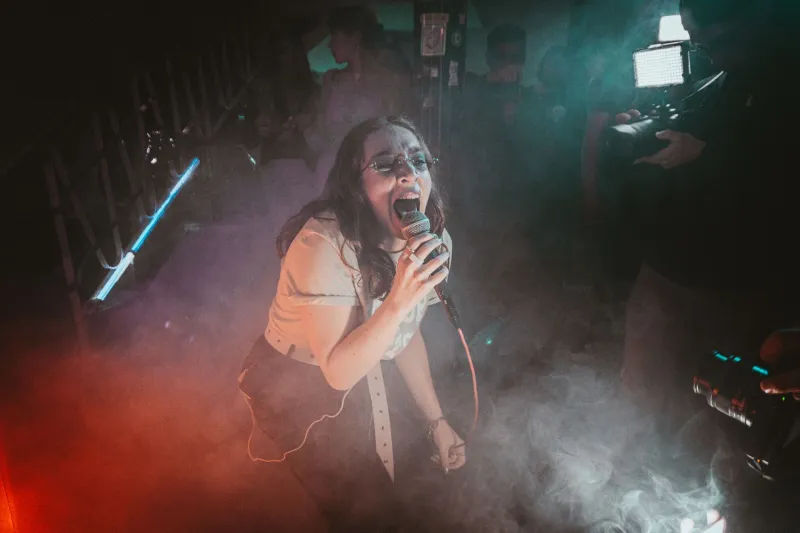
The directions said to turn left at the grain elevator and keep going until the road turned to gravel. There were no signs after that — just a hand-lettered arrow taped to a fence post pointing toward a cluster of lights about a quarter mile off the highway. By the time you heard the music, you were already inside the perimeter of something that didn't have a corporate sponsor, a social media influencer package, or a VIP section. What it had was about 400 people standing in a field in rural Ohio, listening to a solo performer coax genuinely disturbing sounds out of a modified cello, and looking completely at home.
This is the underground experimental festival circuit. It doesn't have a single name or a central organization. It's a loose, shifting network of events scattered across the country — some annual, some one-offs, some that seem to materialize and disappear without warning. What connects them is a shared commitment to music that challenges rather than comforts, and a community of people who have decided that discomfort, shared with others who understand it, is its own kind of home.
How These Things Actually Get Made
The logistics of putting on an independent experimental festival are, by any reasonable measure, absurd. There's no Ticketmaster infrastructure, no corporate catering contract, no professionally managed stage crew. What there is, usually, is a small group of people who decided that a thing should exist and then made it exist through a combination of community fundraising, volunteer labor, and the kind of stubborn optimism that doesn't spend a lot of time calculating odds.
Dana Reyes has organized a two-day experimental music gathering in the Texas Hill Country for the past four years. The event, which doesn't advertise beyond mailing lists and word of mouth, draws between 300 and 500 attendees each year. The lineup is built entirely around personal relationships and a commitment to featuring music that wouldn't survive a booking committee at a mainstream festival.
"The first year, we lost money," she says, sitting in the shade of a canvas canopy that serves as the event's backstage area. "The second year we broke even. The third year we had enough left over to pay the artists something real. That's the trajectory. It's not a business. It's a community project that happens to make sound."
The artists performing at these events are rarely there for the paycheck. They're there because these festivals are often the only spaces where their work gets presented with the context and the audience it deserves. A set that would be a curiosity at a mainstream festival becomes a centerpiece here. The audience isn't tolerating the challenging material. They came specifically for it.
The Crowd That Shows Up
Walk through the audience at one of these events and you'll encounter a demographic mix that defies easy categorization. College students who found experimental music through online rabbit holes. Middle-aged listeners who came up through the noise and post-rock scenes of the '90s and never stopped pushing further. Working musicians who drove eight hours because they wanted to hear something they couldn't hear anywhere closer to home. People who don't play music at all but feel, as one attendee in Ohio put it, "like this is the only music that actually tells the truth about how things feel."
Age ranges are wider than you'd expect. The assumption that experimental and dissonant music is purely a young person's game doesn't hold up on the ground at these events. What the audience shares isn't a demographic profile. It's a specific relationship to discomfort — an orientation toward music that doesn't resolve neatly, that asks something of the listener rather than just delivering a product.
"I've been to Coachella, I've been to Bonnaroo, I've been to all of it," says Marcus, a 34-year-old software developer from Portland who made the drive to a festival in the Pacific Northwest specifically to see two acts he'd been following online. "And this is the only place where I feel like I'm not being sold something. The music is actually trying to do something. That's a different experience."
What Makes These Spaces Different
The differences from mainstream festival culture aren't just aesthetic. They're structural. Without corporate sponsorship comes a freedom that shapes everything from the booking to the physical layout of the event. There are no brand activation areas, no sponsored stages with naming rights, no algorithmic pressure to book whoever is trending. The curators make decisions based on what they think is interesting, full stop.
That freedom produces lineups that are genuinely unpredictable. A solo noise performance might follow a chamber ensemble. An artist working with field recordings and electronics might share a bill with a duo playing extended-technique guitar and drums. The connecting thread isn't genre. It's a shared willingness to use dissonance, tension, and unresolved sound as primary compositional materials.
The physical experience of these events also differs in ways that matter. Smaller crowds mean you're close to the sound — close enough that the physical impact of a sustained low-frequency drone is felt as much as heard. Without the massive PA systems and stadium-scale production of mainstream festivals, the music exists in a more intimate relationship with the bodies in the room. That intimacy changes what the music does.
Building a New Counterculture
The word "counterculture" gets applied loosely, but there's something genuine in the claim that these events represent one. Every major musical counterculture in American history — from the folk revival to punk to rave culture — was built around physical gathering spaces where people with shared values came together around shared sounds. The underground experimental circuit is doing the same thing, with the same emphasis on community over commerce and participation over passive consumption.
What's different now is the role of online community in sustaining what happens at these physical events between gatherings. The people who meet at a festival in Ohio in August are still talking in December, still sharing music, still organizing the next thing. The festival is a node in a network, not a standalone event.
"The festival lasts a weekend," says Reyes. "The community lasts all year. That's the real thing we're building."
The Road Ahead
None of the organizers running these events are under illusions about scale. They're not trying to be Coachella. They're not trying to be anything that already exists. The point is to create something that mainstream festival culture can't or won't create — a space where the most challenging, least commercially viable music gets treated as the main event.
That's a narrow lane. But it's a real one. And judging by the number of people willing to follow hand-lettered arrows down gravel roads to stand in a field and listen to a modified cello do things a cello wasn't designed to do, it's a lane with more room in it than anyone expected.
The map doesn't show where these places are. That might be the whole point.