Quit Chasing Pretty: How Letting Go of 'Good' Unlocked These Artists' Greatest Work
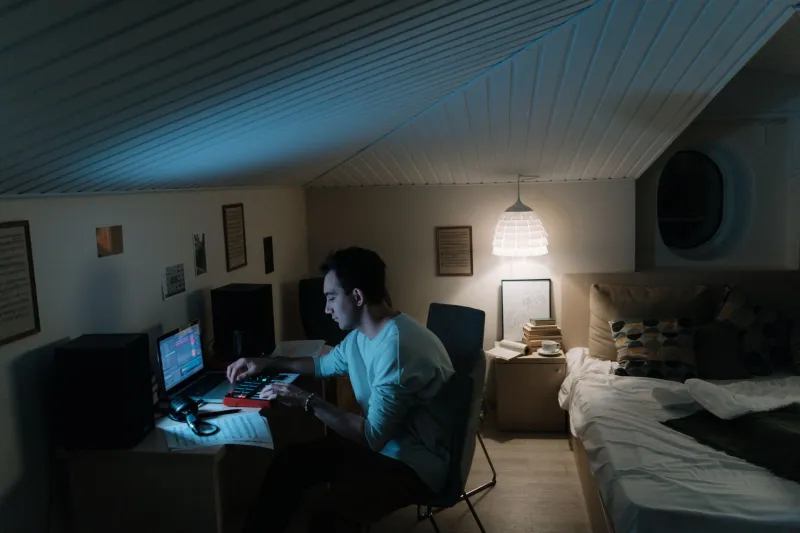
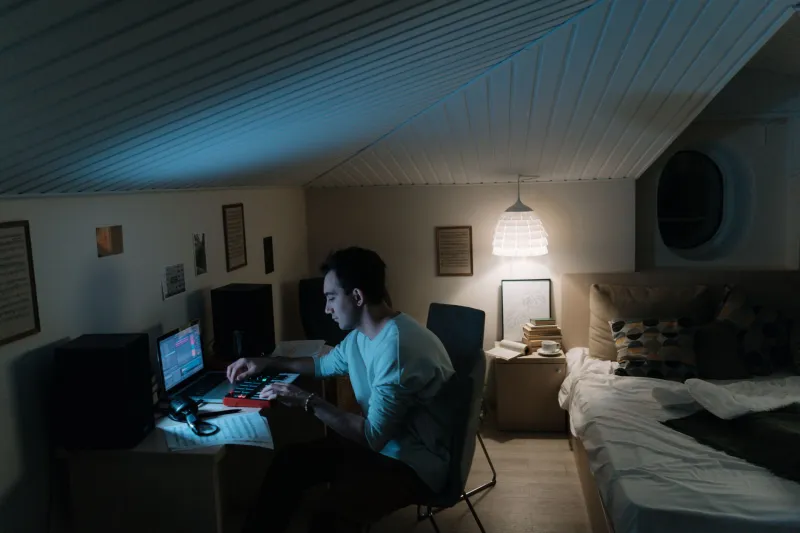
There's a moment a lot of composers describe the same way, even though they've never compared notes. It usually happens late at night, alone in a studio or a bedroom, somewhere around the third or fourth hour of trying to make something sound right. And then — almost by accident — they stop trying. They let the dissonance sit. They leave the tension unresolved. And suddenly, weirdly, the thing they've been building all night finally starts to feel true.
That's the Locrian paradox in its most human form: the music gets better when you stop making it sound good.
It sounds counterintuitive. It probably is counterintuitive. But talk to enough experimental composers and producers working in this space, and a pattern starts to emerge. The pursuit of conventional beauty — clean resolution, pleasing harmony, sounds that don't challenge the listener — can actually become a ceiling. And the artists who've figured out how to work underneath that ceiling, or blow straight through it, tend to produce the work that sticks.
The Moment the Rules Stop Helping
Classical training is an incredible foundation. It's also, for a certain kind of composer, an incredibly comfortable cage.
Spend enough years learning what intervals are "acceptable," what resolutions are expected, what a chord should do next, and those rules start running on autopilot. You don't even notice you're following them anymore. Which is fine — until the music you're making starts to feel like it's following a script someone else wrote.
A lot of the artists working in dissonant and experimental spaces describe a specific turning point: the moment they realized the rules were making decisions for them. One producer who works primarily with avant-garde acts out of Chicago put it bluntly: "I spent years finishing songs that I thought were good. And they were good. They were just not mine." The shift, she said, came when she started asking a different question in the studio. Not does this sound right but does this sound honest.
That reframe — from aesthetic correctness to emotional authenticity — is at the core of what makes intentional dissonance such a powerful compositional tool. It's not about being difficult for difficulty's sake. It's about refusing to smooth over the rough edges that actually carry meaning.
Ugly as a Design Choice
Here's the thing about dissonance: it creates tension. And tension, psychologically, is what makes a listener lean in.
Conventional music theory has spent centuries developing ways to release that tension as quickly and satisfyingly as possible. The resolution is the payoff. But experimental composers have figured out that withholding — or distorting — that payoff can produce something far more emotionally complex than any clean chord progression.
One composer who's worked across noise, drone, and contemporary classical spaces described his process as "building rooms with no exits." The listener walks in expecting a door that leads somewhere familiar, and instead they're just... in the room. "That discomfort is the content," he said. "I'm not torturing anyone. I'm asking them to actually be somewhere instead of just passing through."
That idea — that dissonance can create presence rather than repulsion — is one of the more interesting conceptual flips happening in experimental music right now. The assumption has always been that harsh or unresolved sounds push people away. But a growing body of work (and a growing audience for it) suggests that for a lot of listeners, that friction is precisely what makes the music feel real.
What 'Finished' Actually Means
One of the more practical consequences of embracing dissonance as a compositional tool is that it fundamentally changes how artists decide a piece is done.
In conventional songwriting, "finished" usually means something specific: the melody lands, the harmony resolves, the structure closes. There's a sense of arrival. But when you're working with intentional tension — when unresolved intervals and unexpected timbres are load-bearing elements of the piece — that traditional endpoint disappears.
Several producers described a similar experience: learning to recognize completion not as a sound that settles but as a sound that says what it needs to say. That's a genuinely different standard. It requires the artist to trust their instincts about meaning over their training about form. And for people who've spent years being evaluated on technical correctness, that trust doesn't come easy.
"I used to keep working on a track until it stopped bothering me," said one Brooklyn-based producer who makes dense, layered experimental music. "Now I stop when it starts bothering me in the right way. That's the signal."
The Commercial Surprise Nobody Saw Coming
Here's where things get genuinely strange: some of the artists who've committed most fully to this mindset are also seeing their most commercially resonant work.
It's not that dissonant music is suddenly charting on pop radio. But in the streaming era, where algorithmic discovery has opened up genuinely weird niches, audiences for challenging, unresolved, emotionally raw music have found each other in ways that weren't possible before. And the artists who stopped chasing palatability — who made the thing that felt true rather than the thing that felt safe — are often the ones building the most devoted followings.
There's something almost logical about it, once you sit with it. Audiences are good at detecting effort. They're also good at detecting performance — the sense that an artist is working hard to please rather than working hard to communicate. When a piece of music is genuinely, uncomplicatedly itself, even if that self is abrasive and strange, listeners pick up on the authenticity. And authenticity, it turns out, is one of the few things an algorithm can't manufacture.
The Mental Shift Is the Hard Part
None of this is easy to internalize. Letting go of "good" as a standard — even temporarily, even strategically — runs against everything most musicians are taught from the beginning. The entire infrastructure of music education is built around developing taste, which is really just another word for learning what sounds acceptable.
The artists who've made this shift consistently describe it less as a technique and more as an ongoing practice. It's not something you figure out once and apply forever. It's something you have to re-choose, often in the middle of a session, when the pull toward resolution and polish gets loud.
"It's easier to make something pretty," said the Chicago producer. "Pretty is a reflex. Honest is a decision."
That distinction — reflex versus decision — might be the most useful way to think about what separates experimental dissonance from mere noise. The chaos isn't accidental. The tension isn't a mistake. Every unresolved interval, every deliberately harsh timbre, every moment where the music refuses to give the listener what they expect — those are choices. And the artists making them have figured out that the choice to stop chasing pretty is, paradoxically, one of the most disciplined things a musician can do.